Showing posts with label play. Show all posts

Thursday, 11 April 2013

The Classics Club: As you like it, by W. Shakespeare

For this month's Let's read Plays, I read As You Like it by Shakespeare. 

A play that was intended as a comedy and which I, of course, did not get -at all.  I think I'll stick to Shakespeare's tragedies from now on...

A complex set of characters parade in this play, all with the same background story:

- siblings ostracising each other for the throne:  Oliver and Orlando, Duke Senior and Duke Frederik

- people assuming different identities: Rosalind a.k.a. Ganymede, Celia a.k.a. Aliena

- people desperate in unfulfilled love 

We find ourselves in France.  The beginning is rather sad, as two brothers, Oliver and Orlando, cannot stand each other, with Oliver, the first son and heir to everything, ostracising Orlando from all aspects of life.  Yet, Oliver cannot succeed:

I know not why, (my soul) hates nothing more than he.  Yet he's gentle; never schooled and yet learned; full of noble device; of all sorts enchantingly beloved/ and indeed, so much in the heart of the world, and espacially of my own people, who best know him, that I am altogether misprised

The dynamics between the two brothers come in stark contrast with two cousins, Rosalind and Celia, who are really like sisters.  A small point here that I didn't feel like they were lovers, something I read in several posts - but maybe that's me... Their fathers, the two brothers. are however exactly like Oliver and Orlando and even worse:  in this case, Duke Frederik has actualy driven Duke Senior away.

There are a lot of pastoral elements in this play that appeal to audiences in the past as well as today.  Unfortunately, not to me.  I would describe the play as a light romantic one, certainly not a comedy and a little bit on the boring side...

There is no elaboration of any of the characters and the Deus ex maquina seems to be the only way out of a difficult situation.  In a sudden whirlwind of events we will find ouselves with two girls who pretend to be boys, and one of these boys will pretend to be a girl... Too much confusion, with plenty of allegories for a good life in the woods, for true love, for superficiality

'Tis true, for those that (Nature) makes fair she scarce makes honest, and those that she makes honest she makes very ill-favouredly
The end is predictable, but even so:  the solution found is beyond plausibility - Frederik repends his sins and reconciles with his brother, all couples are straightened out and an epilogue applies the play to both men and women in the audience.

I just couldn't see Shakespeare's maestry in this play.  There was no wit that could showcase his genious.  It was an average work, a tried-and-tested little play, sure to please the audience.

Not bad, but then again not good.


Tuesday, 19 March 2013

The Classics Club: Antigone

For this month's Let's read Plays, I read Antigone by Sophocles.  A shortish play that forms part of the Theban plays, together with Oedipus Rex and Oedipus at Colonus.  

It is a tragedy, as many of Sophocles' plays, but with a slight twist:  here the main character is a woman, a woman defying the limitations of her gender at the time, a woman ready to accept the consequences of her actions.

Her father is dead, her brothers are dead, and Antigone is now left alone with her sister Ismene.  But while Ismene is the typical fairy creature, Antigone is a boyish creature (she reminded me of Joan of Arc), wishing to go beyond the rights given to her gender.  But her uncle Creon, who is now king, will not allow for this.  She is to marry his son, Antigone's cousin, Haemon and do great things for Thebes.

Antigone, however, has different views.  Her brothers died a vicious death, trying to kill each other for the throne of Thebes.  Creon only buried one of the brothers, Eteocles, leaving the second to rot in the elements - something against the customs of the time.

While this is a compact play, there is a variety of themes across the story:  should the family / moral values supersede those imposed by the establishment in the city? for whatever reasons, Creon has banned the citizens from covering Polynices and has even warned anyone with severe punishment.  Still, Antigone cannot let this deter her from her sacred duty towards her family.  Not only that, she's willing to accept her punishment and she will even go against her sister, who's trying to reason with her.  But therein comes the second theme:  that of blind arrogance.  Both Antigone and Creon believe their side of the story the correct is.  The difference between them is that Creon becomes so consumed with his anger towards the "insubordination" of Antigone, that he orders his guards to keep a close leash on both sisters so that they... behave like women again (*insert slight sneer*).

But the biggest theme must be the curse of the house of Oedipus.  All three of the tragedies are very detailed on the misfortunes that befall on the last remaining members of the family, Antigone and Ismene.  They cannot escape:  ever since the glorious victory of Oedipus and his marriage to Jocasta, disaster has remained in this house, "eating up" its members one by one.    But the play also makes a case for love:  Haemon tries to make Creon see reason and not bury Antigone alive and even hints at a possible suicide if Creon doesn't change his mind.  While by today's standards all this would be considered overwhelming and irrational, it is the purpose of this tragedy to show that humans have limited capabilities, their emotions can be destructive and only the fate dictated by the gods should be their guiding light. The only way to convey this message is to exaggerate and present all the horrible results if humans do not abide.
Even the end reads like a list of lessons learnt:  pride can be damaging, wisdom is welcome, obedience to gods compulsory and most important of all:  there is no purpose in violence...


Also read for the 2013 Back to the Classics challenge

Sophocles' Antigone (in both Greek and English) is available on Project Gutenberg.    
This post will also be published on Project Gutenberg Project.

Monday, 4 March 2013

The Classics Club: Cymbeline

For February's Let's Read Plays, I chose to read Cymbeline by Shakespeare.  I was intrigued by the reports I had read about this not being Shakespeare's finest works, of it actually being the work of someone else, or - worse - of it being pieced together and not in the smoothest way...

Well, in a nutshell, I have to agree.  I was almost frustrated when I finished reading it because I did not know what to make of it.  The mess in the plot, the unbelievable twists, the Deus ex-machina and the forced happily ever after - well, at least it made for an eventful reading...

Wednesday, 30 January 2013

The Classics Club: The Merchant of Venice

For January, Let's Read Plays gives free choice of a play.  Would I choose an easy, romantic, harmless play to read?  Of course not!  I chose The Merchant of Venice by Shakespeare - a play that really troubled me and I still can't say whether I liked it or not...

While reading about the play, I have remarked that most comments focused on the anti-semitic element of the play.  That was the one thing that bothered me, the other being the ending itself of the play ...

Monday, 10 December 2012

The Classics Club: The Comedy of Errors

Most of the time, I enjoy a book better than any adaptation.  The tone, the language, the descriptions, all these factors play an important role for me to understand and fully enjoy the plot.  But there are those plays that need... to be played out to get the essence of what the author has in mind.  I consider The Comedy of Errors by William Shakespeare one such play - which I had the pleasure to see (via streaming) live from the National Theatre in London (Alex wrote a nice little post on that experience).  Still, it doesn't mean I wouldn't be able to find good things in the book as well:

Wednesday, 28 November 2012

The Classics Club: Antony and Cleopatra

Fanda is hosting one of the greatest "challenges" for the end of the year:  aptly named "Let's read plays", it offers one classic play per month to enrich our knowledge of this great genre.  It starts now in November and goes on for a yearlong celebration! 

November is Shakespeare Tragedy month, and I chose to read Antony and Cleopatra.  I've seen the Hollywood version of it, with E. Taylor and R. Burton (I assume this is also the more famous interpretation), but I've always wondered how much the excitement and ups and downs in the film were because of this couple, or whether they were depicted in the play as well...

Wednesday, 19 September 2012

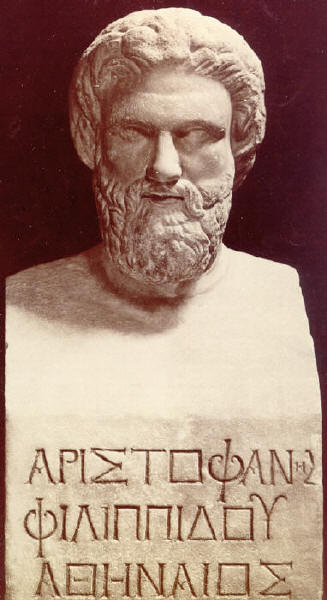
The Classics Club: The Frogs (Bάτραχοι)

The idea of the Classics Club is to read or re-read all those gems of literature that have had an important effect on readers throughout the centuries.  
Among the works I chose, I took this opportunity to also visit the ancient Greek plays, having only studied the serious, philosophical prose at school.  
I read the The Frogs (Βάτραχοι) by Aristophanes, heralded as one of the major playwriters in Athens, whose works were actually considered teaching material - this play won first place at one of the festivals of Dionysus.  I also decided to read it in the original, to feel every nuance of the words used...

Tuesday, 21 August 2012

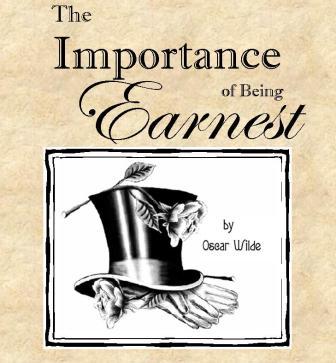
The Classics Club: The importance of being Earnest

One of the fun parts in blogsphere, in my mind, are the read-a-longs.  Several bloggers read one piece of literature and exchange ideas and opinions about it.  What usually comes out of this, are bits that one had never thought about and comparisons with similar (or not) pieces that may trigger further interest (and additions to the TBR lists...)

Wallace at Unputdownables hosted the read-a-long of The Importance of Being Earnest by Oscar Wilde in August.  It was a brilliant little play, perfect for the laid-back month of holidays (at least for me...)

Tuesday, 6 March 2012

Macbeth


I didn't know what to expect of Macbeth by Shakespeare.  Having only heard small passages of the play in various classic mystery films (the latest was a Columbo episode, where the murderers were actors playing Macbeth and Lady Macbeth),  I was not sure whether all this war theme and blood and madness would appeal to me.


I loved it.  Plain and simple - I loved it.

I enjoyed the gradual degradation in Macbeth's feelings towards the witches' oracles:  in the beginning, when even Banquo tells Macbeth that
"... to win us to our harm, the instruments of darkness tell us truths", 
Macbeth replies:
"if chance will have me king, why, chance may crown me without my stir"
only to shortly afterwards exclaim:
"that is a step, on which I must fall down, or else o'erleap, for in my way it lies. Stars, hide your fires! let not light see my black and deep desires"
before foreseeing doom:
"Will all great Neptune’s ocean wash this blood clean from my hand? No, this my hand will rather the multitudinous seas incarnadine, making the green one red"

and already I had the feeling that Shakespeare insinuates that the trick with the Witches actually the deep immoral thoughts of Macbeth were - he personified his inner want for power to the hated figures to justify the evil taking over his soul and to justify his actions.
Macbeth is further descending into madness when he realises that everyone is his rival - as there are no direct heirs to him, it will be Banquo's children he will have committed the crimes for - therefore they must die.  What an insight into the tortured soul of someone already realising that he's at a point of no return...

Lady Macbeth is a character I couldn't quite make out.  She's portrayed as the evil initiator, asking spirits to
"... unsex me here; and fill me, from the crown to the toe, top-full of direst cruelty!"
but cannot afterwards bring herself to live with the idea of her deeds (or rather her contribution) and dies:
"... unnatural deeds do breed unnatural troubles"
the blood from the first killing has stained her for good and she can't just seem to be able to pull through.  But being such an evil planner, I would never have suspected she would be of a sensitive nature - there, of course, comes Shakespeare to bring everything off balance and provide a twist to the story.  
Her death drives Macbeth further into despair, delivering the perhaps most famous monologue on "tomorrow", on how his life no longer has a meaning, but is rather "a tale told by an idiot... signifying nothing" (I'm still in awe of this monologue - if it's all a tale meaning nothing, then all  the conspiracies, all the deaths are "nothing"? 


A truly great play with yet another innovation - I loved the fact that the most important parts of the play do not actually take place in the main stage, but are rather presented afterwards or only mentioned ... this, however, sent my poor imagination into overdrive -- if I could close my eyes to the horrible scenes I was imagining, I would!

The language used throughout is fairly strong and gory, which is exactly the indication that this is no child's play  -- we find ourselves in a dangerous plot, we witness the darkest hours of human kind through the eyes of Macbeth and Lady Macbeth.  Several of the monologues have become iconic for pointing right at the core of the feelings of the characters, be it the preparation phase for a murder or the time afterwards, when they realise what has been done.  I would even go as far as to say that the play is a series of well-delivered monologues showing the spiralling fall of Macbeth. It's not nice, but it's truly interesting!
On the other hand, I also like the rhyme-like dialogues of the three witches and Hecate, blurring out horrible things in such a pretty way... It's a twisted hilarity to an otherwise solemn play.


I've read the psychological interpretation of Macbeth, but I would rather not see it purely as an essay on ambition / aggression and masculinity - I like to think this is play on the loss of control and morals and the ensuing dangers. A lesson bound to have had an audience in those times...

***

For the visual interpretation of this play, I watched the 1979 version of Macbeth with Ian McKellen and Judi Dench (not yet Sir and Dame at the time). I cannot recommend this version enough - beautiful chemistry between the two, mastery of the gory nature of the play and then there were the monologues - both by Dench on the "come spirits..." but especially by McKellen on "is this a dagger..." and "tomorrow and tomorrow and tomorrow" - they are truly unbelievable and sent shivers down my spine!


Tuesday, 7 February 2012

Pygmalion

Pygmalion by G.B. Shaw has been one of my favourite plays on screen, both in the 1938 and the 1964 versions. I recently also had the pleasure of watching it on stage in London with R. Everett, K. Tointon and D. Rigg. After such an overdose of visual, it was time for the written word to see what the author himself has in mind.

Pygmalion tries to bring the original myth into real life.  In it, a man, disillusioned with women, renounces them and lives alone.  While making a statue of a woman, falls in love with it, and prays for it to become an actual woman - Galateia (and they lived happily ever after...)
With this myth in mind, I set off to reading this play and already I was perplexed - I could not find any romantic predisposition in Shaw's work - everything is so "common" with the details of everyday life, with all the faults, insecurities and expectations.

What I did find, however, was this drive to address gender and class inequality in society (then and now). The play attempts to unite lower and upper class systems as well as male and female roles. As to the characters of the play, they do come through as rather "rigid", each more or less confined to their own boundaries of character.  I had read that this is supposedly a feminist play, given the fact that Eliza is the apparent victor, surpassing her confines, but I would like to raise an issue - She did indeed go beyond her "limits", but primarily because of the push she received by Higgins and Pickering (even if this was done for a bet).  So, I wonder, would she have achieved the same on her own?  Would society have allowed her to go beyond being a flower girl? hmmm....  I'd rather think this play is about the ability, given the chance, we all have to rise above our social status in life and "better" ourselves, just as Eliza did.  It is up to us to take advantage of the possibilities that come our way and emerge victorious...

On other points in this play, I found the use of minor characters an excellent means to showcase the way people treat each other with regard to class distinction. I thoroughly enjoyed Alfred Doolittle, Eliza's father, who is dragged into "middle class morality" and completely changes character...

And one slightly negative (on my part) point on the play - the very long acts.  Being a reader who has to stop at completed scenes (I think it's called compulsive), I had a couple of all-nighters before I could let the book down...

Did I mind that the play does not have a happy ending?  Certainly not!  I actually fully agree with Shaw:

"The rest of the story need not be shewn in action, and indeed, would hardly need telling if our imaginations were not so enfeebled by their lazy dependence on the ready-mades and reach-me-downs of the ragshop in which Romance keeps its stock of 'happy endings to misfit all stories."

As to which of the versions I prefer? I'm afraid it's not the book - rather the 1938 movie vesion (screenplay by Shaw himself, won the relevant Academy award)


Pygmalion (1938)
Leslie Howard, Wendy Hiller


Wednesday, 25 January 2012

A mid-summer night's dream read-a-long

An interesting readalong on the net is Reading Shakespeare - a play a month... an ingenious idea and within a time frame that is feasible even for someone with a überfull-time job like myself... My solution to separating the readalongs with the challenge and book club reading, is to dedicate my weekends to the readalongs, and to read all other books over the week (I am organised, if nothing else...)

A mid-summer night's dream is a well-known fairy tale of love, betrayal and tricks... all the right ingredients for a havoc made in fairyland...

Shakespeare starts off with the main cause of distress in Athens: a strange love-triangle, with Hermia loving Lysander but being loved by Demetrius, who shuns Helena, who's in love with Demetrius... Oufff! Already the complications show the way to how the story proceeds... I find it weird that Demetrius would insist on marrying Hermia who doen’t love him, or the Helena would be so infatuated with Demetrius (but then again I am a present-day cynic…). The only couple that seems closer to today's standards is Hermia and Lysander, but there, as well:

"The course of true love never did run smooth"

Why the use of magic and fantasy in this play? I believe that the fantasy world is the only chance we get to find and express our true feelings, our gateway from the “real” world, with all its boundaries and insecurities – then but even more so now. 

Shakespeare also uses quotes to reach the desired effect: Egeus talks about his daughter Hermia “As she is mine I may dispose of her” (grrr…) but even Theseus, the duke, telling her “To you your father should be as a god” (double grrr…) – of course I was laughing while reading these quotes, but nevertheless they made me wonder how much this exaggeration could highlight the difficulties people faced (and face) when not following the "accepted" road (in love, but also in other matters). 

An on to the world of fairies. I found Act II especially poetic (I suppose it fits perfectly with the fairy world) and I thoroughly enjoyed the reference to Cupid and I suppose Elisabeth?? Because if it is indeed Queen Elisabeth, I can understand the reference made by Hermia to Lysander to keep a distance… 

Various misunderstandings happen, and affections change among the different couples - in real life this would be considered a serious matter, but in the play it's described in a merry and lighthearted manner. This made me wonder whether the play is about love at all: if I compare it to Romeo & Juliet (an exaggerated example, I agree) I cannot see the same depth of character or use of language. I start to think whether this play is not  a slight mockery of what people do for (or because) of love (with the help of Puck!). 


What is beautiful about Shakespeare's plays is, of course, the language.  If someone else took these same elements of the story and tried to present it to me, I would not be amused...  But, here, every flower brings a note of something in the story, every time Puck speaks, I feel like wandering off to the woods... Those who have watched stage productions get a different glimpse into the world of Shakespeare, but I, a non-native speaker, am also content with the Hollywood version of 1999, which I admit is not that bad:  when the play executed nicely, the language comes alive (which it is) and paints bright stars in the night...


That night when everything seems to go wrong... wrong people/fairies get the potions, horrible truths come up in the air (dwarf?  where are your stiletto heels, woman???) and insecurities rage in the air while someone becomes an ass... And for all that we blame a tiny bit of potion?  Can it be that love is so magical, that any confusion and disorder can only be because of a "trick"? are we mortals so without magic, that we don't have the capacity to feel perplexed otherwise?

In the following act, I have my only two objections in the play:  the one where Oberon requests the child from Titania in exchange for undoing the spell, which he receives -- a very thin line between the magic of love and blackmail? And then Demetrius is still under the first spell when love is restored between him and Helena.  No true feelings of love, then.  But all is all right, balance is restored, and as the magic of the night is undone, the sun rises and there are two weddings take place. 
Here again, Shakespeare is innovative:  he could very well have put a full stop and be done with the play.  But he chooses instead to focus on the sub-plot of a play within the play, of Pyramus and Thisbe, to provide some enjoyment to the public, after the "crises" presented before.

I must admit that from all the characters in this play, I thoroughly enjoyed Puck -- he's such a naughty, little creature that I can't but like him (and the fact that he's interpreted by S. Tucci in the film is an extra bonus...) and I particularly like the ending, that makes sure that the audience will leave in good mood (ingenious Shakespeare at his best):

"If we shadows have offended,
Think but this, and all is mended,
That you have but slumber'd here
While these visions did appear.
And this weak and idle theme,
No more yielding but a dream,
Gentles, do not reprehend:
if you pardon, we will mend:
And, as I am an honest Puck,
If we have unearned luck
Now to 'scape the serpent's tongue,
We will make amends ere long;
Else the Puck a liar call;
So, good night unto you all.
Give me your hands, if we be friends,
And Robin shall restore amends".

ShareThis

LinkWithin

Related Posts Plugin for WordPress, Blogger...