Showing posts with label readalong. Show all posts

Saturday, 24 May 2014

Moby Dick: A whale of a readalong!

Yep, I have to drag myself back into the art of reading and writing about it -- plus, I've wanted to read Moby Dick for a very long time.  No time like the present, and RoofBeamReader's invitation was hard to resist.

For my reading, I plan to use two modes:  my wonderful hard-bound copy purchased at the well-known English bookstore Shakespeare and Company in Paris, that's bound to bring back happy memories of a spectacular bookstore and a well-read personnel, ready to help with all types of requests...

and ...

The podcasts from Moby Dick Big Read, which, back in 2012, I would religiously wait for to download because I worried they would disappear.  Fear not, the site still exists and it is a once-in-a-lifetime chance to hear beautiful voices read each chapter (and marvel at the artistic interpretations).  I plan to use these podcasts on my daily walks and hope that the combination of listening and reading brings me to the 15 pages per day RoofBeamReader suggests...


Join the readalong - a great way to start the summer!

Monday, 27 May 2013

The Classics Club - Crime and Punishment, by F. Dostoyevsky

I read Crime and Punishment by F. Dostoyevsky in a readalong organised by  Unputdownables over a period of three months.  This is, in my opinion, the best way to read such a chunk of classic Russian literature - in a rythme that is manageable, with lots of individual perspectives heard on a plot written in a remarkable style and taking place in an era and a society that are mostly foreign to us.  

And yes, Dickens writes about similar circumstances but I find his writing style more "understandable".  Also, the British reality is perhaps nearer my vision of past history in Europe.  In any case, the fact that several people read this at the same time, with different translations (also a great way to learn different aspects of life depending on the translator's sources) and different annotations shedding light to background information, really proved helpful and made such a great book easy to read as well.

Thursday, 2 May 2013

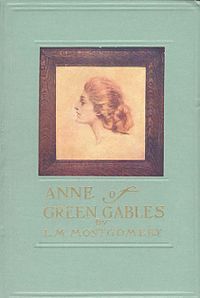
The Classics Club: Anne of Green Gables

Sometimes I wonder how I went through childhood without any of the "classic" children's books.  True, I had Verne's fantasy novels and Charlotte's web, but I think I jumped too soon on to "adult" literature and am left wondering whether I've missed on something.  Making up for this, then, is to read such novels now and try to imagine whether I could have appreciated them at a younger age...

Ebookclassics organised a readalong for the month of April of Anne of Green Gables, and while I could not participate in the weekly discussions, I really appreciated the opportunity to visit one of the prolific authors of children's literature, Lucy Maud Montgomery and read the first novel of the Anne series.

Tuesday, 21 August 2012

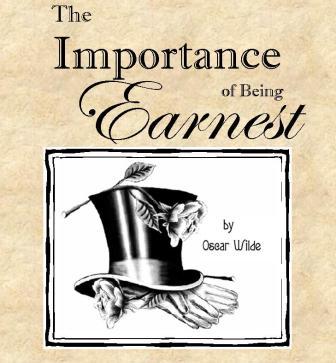
The Classics Club: The importance of being Earnest

One of the fun parts in blogsphere, in my mind, are the read-a-longs.  Several bloggers read one piece of literature and exchange ideas and opinions about it.  What usually comes out of this, are bits that one had never thought about and comparisons with similar (or not) pieces that may trigger further interest (and additions to the TBR lists...)

Wallace at Unputdownables hosted the read-a-long of The Importance of Being Earnest by Oscar Wilde in August.  It was a brilliant little play, perfect for the laid-back month of holidays (at least for me...)

Monday, 18 June 2012

The Classics Club: Bleak House

On the occasion of the bicentenary of Charles Dickens' birth, I read one of his epic novels, Bleak House.  In it, we follow Esther leaving her childhood home to go live with her guardian Mr. Jarndyce, as well as two other children, Richard and Ava, in Bleak House. Without further ado, we are introduced to the chaotic life of Mr. Jarndyce and of the infamous Jarndyce & Jarndyce court case, which has and is still destroying all the people in its proximity.

Bleak House starts in great writing style.  Dickens takes every pain to carefully describe the person, the case, the situation - even the helplessness surrounding the Jarndyce case... At times, he may give the impression of exaggerating, but I felt that all words had a distinct purpose.

Wednesday, 11 April 2012

Bleak House read-a-long - thoughts in the beginning


I've started reading one of Dickens' most famous books, Bleak House, in a read-a-long organised by Wallace. Here are my thoughts after a bit over a month of reading:


This being the 200th anniversary of Dickens, I am reading quite a number of his works - some I like, some not so much. I started reading Bleak House right after having finished another of his books which I did not like much, and what a relief this one is! A writing style that is totally different, a writing that invites me to read on. From the beginning, Dickens uses a parade of words that seem to exaggerate, but actually serve a purpose: to exactly describe the person, the case, the situation… (as in the helpnessness surrounding the Jarndyce case). These words provide such precision to the story itself, I can place the main actors in their respective situations much more effectively than if I had to use my own imagination (which tends to go to overdrive…). I also get to witness an excellent use of language – which does not make for a melodramatic story, just more thorough in my understanding.

The main narrator is Esther, a "lost soul" I would describe her for now, who finds herself from a loveless environment with her aunt, to the company of two heirs, where she is to be the companion of the girl. I found it surprising that Dickens chooses to use a woman to narrate (Iwould have thought that in those days the easy thing would be to have a man do this) - but I quickly understood why: he makes her sound too good - I still wait for a twist somewhere in the book that will show something dark in her character…

In this part, I'm also fascinated by the manner in which Dickens describes "social injustice":  he never ceases to point the finger at the the two sets of standards that exist in his society, even for the ridiculous things: the upper class who have a right to a ghost, the vain who make a great deal of noise about the little things they do, the orphans who are expected to be the little old women (taking care of everyone else). I would say Dickens’ social comments hit a point that is just as relevant today as it was then. 

Much as I was mesmerised by Dickens' writing in the beginning, however, I soon found myself having trouble keeping track of all characters introduced.  In addition to purely descriptive parts (I've since found out that the book was first published in several installments, so naturally, he might have had to find additional content to make this possible), all these new characters puzzled me (I agree that it is intentional, and I can’t wait for the new angles in the story). Fortunately, the unmistakable pen of Dickens is apparent and makes up for this disturbance – whether it describes the cemeteries, where diseases are “communicated” to the living, or the everyday lives of the main characters. The chapter of Lady Dedlock are much more fascinating, as the caustic remarks Dickens makes about her and Sir Leicester and their boredom and their complacency are just too funny to pass by.
The twists in Bleak House are neverending, and so is the connection of the characters: Lady Dedlock is interested in finding out about Nemo, whose doctor is fetched by Miss Flite, who is the new friend of Miss Jellyby, who is a friend of Esther… I only hope this sorts itself in the coming chapters.
Towards the middle of the book,  we get at last a glimpse at what (I hope) the second part of the book has in store – the revelations about both Nemo and Esther have roused my curiosity, and I just have to pause myself from imagining all the possible combinations and explanations and hidden stories around the main characters!

Tuesday, 6 March 2012

Macbeth


I didn't know what to expect of Macbeth by Shakespeare.  Having only heard small passages of the play in various classic mystery films (the latest was a Columbo episode, where the murderers were actors playing Macbeth and Lady Macbeth),  I was not sure whether all this war theme and blood and madness would appeal to me.


I loved it.  Plain and simple - I loved it.

I enjoyed the gradual degradation in Macbeth's feelings towards the witches' oracles:  in the beginning, when even Banquo tells Macbeth that
"... to win us to our harm, the instruments of darkness tell us truths", 
Macbeth replies:
"if chance will have me king, why, chance may crown me without my stir"
only to shortly afterwards exclaim:
"that is a step, on which I must fall down, or else o'erleap, for in my way it lies. Stars, hide your fires! let not light see my black and deep desires"
before foreseeing doom:
"Will all great Neptune’s ocean wash this blood clean from my hand? No, this my hand will rather the multitudinous seas incarnadine, making the green one red"

and already I had the feeling that Shakespeare insinuates that the trick with the Witches actually the deep immoral thoughts of Macbeth were - he personified his inner want for power to the hated figures to justify the evil taking over his soul and to justify his actions.
Macbeth is further descending into madness when he realises that everyone is his rival - as there are no direct heirs to him, it will be Banquo's children he will have committed the crimes for - therefore they must die.  What an insight into the tortured soul of someone already realising that he's at a point of no return...

Lady Macbeth is a character I couldn't quite make out.  She's portrayed as the evil initiator, asking spirits to
"... unsex me here; and fill me, from the crown to the toe, top-full of direst cruelty!"
but cannot afterwards bring herself to live with the idea of her deeds (or rather her contribution) and dies:
"... unnatural deeds do breed unnatural troubles"
the blood from the first killing has stained her for good and she can't just seem to be able to pull through.  But being such an evil planner, I would never have suspected she would be of a sensitive nature - there, of course, comes Shakespeare to bring everything off balance and provide a twist to the story.  
Her death drives Macbeth further into despair, delivering the perhaps most famous monologue on "tomorrow", on how his life no longer has a meaning, but is rather "a tale told by an idiot... signifying nothing" (I'm still in awe of this monologue - if it's all a tale meaning nothing, then all  the conspiracies, all the deaths are "nothing"? 


A truly great play with yet another innovation - I loved the fact that the most important parts of the play do not actually take place in the main stage, but are rather presented afterwards or only mentioned ... this, however, sent my poor imagination into overdrive -- if I could close my eyes to the horrible scenes I was imagining, I would!

The language used throughout is fairly strong and gory, which is exactly the indication that this is no child's play  -- we find ourselves in a dangerous plot, we witness the darkest hours of human kind through the eyes of Macbeth and Lady Macbeth.  Several of the monologues have become iconic for pointing right at the core of the feelings of the characters, be it the preparation phase for a murder or the time afterwards, when they realise what has been done.  I would even go as far as to say that the play is a series of well-delivered monologues showing the spiralling fall of Macbeth. It's not nice, but it's truly interesting!
On the other hand, I also like the rhyme-like dialogues of the three witches and Hecate, blurring out horrible things in such a pretty way... It's a twisted hilarity to an otherwise solemn play.


I've read the psychological interpretation of Macbeth, but I would rather not see it purely as an essay on ambition / aggression and masculinity - I like to think this is play on the loss of control and morals and the ensuing dangers. A lesson bound to have had an audience in those times...

***

For the visual interpretation of this play, I watched the 1979 version of Macbeth with Ian McKellen and Judi Dench (not yet Sir and Dame at the time). I cannot recommend this version enough - beautiful chemistry between the two, mastery of the gory nature of the play and then there were the monologues - both by Dench on the "come spirits..." but especially by McKellen on "is this a dagger..." and "tomorrow and tomorrow and tomorrow" - they are truly unbelievable and sent shivers down my spine!


Friday, 27 January 2012

The Great Gatsby - the end

Yes, it's over.
I'm through reading the Great Gatsby and I'm at a loss.  Why? WHY?
Why does such a wonderful story have to end in such an abrupt manner?

In this part, Gatsby receives his last analysis of character.  We see him when he's first introduced to Daisy and her world.  He's gobsmacked with this new feeling of "breathless intensity" and "the ripe mystery" that surrounds Daisy's world.  Daisy is also a hot ticket, with many admirers around her.  Gatsby wants to be part of this world and "own" Daisy, and hence his road to accomplishments.

Compared to the previous parts, this one contains the final highlights to a tragic story.  Here we get to see the utmost betrayal of a human to another human:  Tom and Daisy vs. Gatsby:  

"They were careless people, Tom and Daisy -- they smashed up things and creatures and then retreated back into their money or their vast carelessness or whatever it was that kept them together, and let other people clean up the mess they had made..."  

The story of the accident and the subsequent havoc is described very fast (I suppose this is how fast it happens), so much so that I actually had to go back and re-read the part, because I had the feeling I had missed something.  But no, it's over in less than a page...


I feel sad.  Even though the portrait of Gatsby has many flaws, I felt there is genuine wish on his part to improve.  For whatever reason, I'm not sure, but he - at least - is the one character retaining his integrity throughout the book.  He doesn't adapt according to wishes or needs, he doesn't change according to society's whims.  After the accident, I began reviewing all the previous parts, in a new light now.  How superficial society can be! Top actors certainly are Tom and Daisy, but even Jordan now seems a colourless and tasteless creature.  One minor character is introduced in this last part, Gatsby's dad, a nice, charming old man.  And here we learn that Gatsby was actually financing his dad's life.  Even though he refused to adopt his parents' credo for a simple life, did he perhaps see the beauty and realism of it?  Or perhaps he realised how futile his obsession with the "fake" past was?  the past that in the end came back to claim his life...


All in all, an excellent piece of in-depth literature that I would recommend to everyone - great topic for a read-a-long, chosen by Wallace at http://unputdownables.net/

*******

I waited patiently until I had finished the book to re-watch the original Gatsby movie with Redford and Farrow.  How great this movie is - what great performances at just the right dose each!  I cannot imagine how the remake will try to live up to these standards... I suppose I will watch it at some point, but I can't honestly say whether I'll ever choose Di Caprio over Redford...

Wednesday, 25 January 2012

A mid-summer night's dream read-a-long

An interesting readalong on the net is Reading Shakespeare - a play a month... an ingenious idea and within a time frame that is feasible even for someone with a überfull-time job like myself... My solution to separating the readalongs with the challenge and book club reading, is to dedicate my weekends to the readalongs, and to read all other books over the week (I am organised, if nothing else...)

A mid-summer night's dream is a well-known fairy tale of love, betrayal and tricks... all the right ingredients for a havoc made in fairyland...

Shakespeare starts off with the main cause of distress in Athens: a strange love-triangle, with Hermia loving Lysander but being loved by Demetrius, who shuns Helena, who's in love with Demetrius... Oufff! Already the complications show the way to how the story proceeds... I find it weird that Demetrius would insist on marrying Hermia who doen’t love him, or the Helena would be so infatuated with Demetrius (but then again I am a present-day cynic…). The only couple that seems closer to today's standards is Hermia and Lysander, but there, as well:

"The course of true love never did run smooth"

Why the use of magic and fantasy in this play? I believe that the fantasy world is the only chance we get to find and express our true feelings, our gateway from the “real” world, with all its boundaries and insecurities – then but even more so now. 

Shakespeare also uses quotes to reach the desired effect: Egeus talks about his daughter Hermia “As she is mine I may dispose of her” (grrr…) but even Theseus, the duke, telling her “To you your father should be as a god” (double grrr…) – of course I was laughing while reading these quotes, but nevertheless they made me wonder how much this exaggeration could highlight the difficulties people faced (and face) when not following the "accepted" road (in love, but also in other matters). 

An on to the world of fairies. I found Act II especially poetic (I suppose it fits perfectly with the fairy world) and I thoroughly enjoyed the reference to Cupid and I suppose Elisabeth?? Because if it is indeed Queen Elisabeth, I can understand the reference made by Hermia to Lysander to keep a distance… 

Various misunderstandings happen, and affections change among the different couples - in real life this would be considered a serious matter, but in the play it's described in a merry and lighthearted manner. This made me wonder whether the play is about love at all: if I compare it to Romeo & Juliet (an exaggerated example, I agree) I cannot see the same depth of character or use of language. I start to think whether this play is not  a slight mockery of what people do for (or because) of love (with the help of Puck!). 


What is beautiful about Shakespeare's plays is, of course, the language.  If someone else took these same elements of the story and tried to present it to me, I would not be amused...  But, here, every flower brings a note of something in the story, every time Puck speaks, I feel like wandering off to the woods... Those who have watched stage productions get a different glimpse into the world of Shakespeare, but I, a non-native speaker, am also content with the Hollywood version of 1999, which I admit is not that bad:  when the play executed nicely, the language comes alive (which it is) and paints bright stars in the night...


That night when everything seems to go wrong... wrong people/fairies get the potions, horrible truths come up in the air (dwarf?  where are your stiletto heels, woman???) and insecurities rage in the air while someone becomes an ass... And for all that we blame a tiny bit of potion?  Can it be that love is so magical, that any confusion and disorder can only be because of a "trick"? are we mortals so without magic, that we don't have the capacity to feel perplexed otherwise?

In the following act, I have my only two objections in the play:  the one where Oberon requests the child from Titania in exchange for undoing the spell, which he receives -- a very thin line between the magic of love and blackmail? And then Demetrius is still under the first spell when love is restored between him and Helena.  No true feelings of love, then.  But all is all right, balance is restored, and as the magic of the night is undone, the sun rises and there are two weddings take place. 
Here again, Shakespeare is innovative:  he could very well have put a full stop and be done with the play.  But he chooses instead to focus on the sub-plot of a play within the play, of Pyramus and Thisbe, to provide some enjoyment to the public, after the "crises" presented before.

I must admit that from all the characters in this play, I thoroughly enjoyed Puck -- he's such a naughty, little creature that I can't but like him (and the fact that he's interpreted by S. Tucci in the film is an extra bonus...) and I particularly like the ending, that makes sure that the audience will leave in good mood (ingenious Shakespeare at his best):

"If we shadows have offended,
Think but this, and all is mended,
That you have but slumber'd here
While these visions did appear.
And this weak and idle theme,
No more yielding but a dream,
Gentles, do not reprehend:
if you pardon, we will mend:
And, as I am an honest Puck,
If we have unearned luck
Now to 'scape the serpent's tongue,
We will make amends ere long;
Else the Puck a liar call;
So, good night unto you all.
Give me your hands, if we be friends,
And Robin shall restore amends".

Friday, 20 January 2012

The Great Gatsby - week three


This has been a roller coaster of a journey and I found this particular part of The Great Gatsby very exciting!
We now get to the heart of the matter:  the beginnings of Gatsby and the climax of his relationship with Daisy.
The descriptions in this part are not only magnificently written but also provide the exact nuance needed to understand the deeper emotions, wants, needs - the essence of this book.

Gatsby starts from humble beginnings, but his dreams for a better life push him to higher aspirations.  He refuses to accept his provenance: 

"these reveries ... were a satisfactory hint of the unreality of reality"

Gatsby already then starts showing signs of megalomania that will on the one hand help him attain his material goals in life, but will prove also detrimental to his psyche:

His encounter with Daisy five years after their initial affair finds him having accumulated so much energy that I could feel the palpitations in the room.  His race towards becoming what he thinks he needs to become so that he's accepted by his love has darkened his inside world. Nothing good can come out of this.  I can already see that there is disaster bound to happen.  The language used  is so vibrant, particularly in this part, I could just bite off my fingernails in anticipation:

"he wanted nothing less of Daisy than that she should go to Tom and say "I never loved you"

How can she? how can he expect love to be as straightforward as having great houses, great boats, great food and drink?  how can he expect Daisy to wake up after five years and run to him?  WHY would she?

Aaaahhh... the human soul!  In matters of love, we become little children.  We want something (someone), we calculate our way towards our goal, and we are certain that if our part of the deal is kept, so will the other side.  How simple life would be...
No, Gatsby has put Daisy onto a pedestal, like a goddess, has calculated his way towards her, and obviously he must be smashed:

"You love me TOO? ... the words seemed to bite physically into Gatsby"

The demise ... in the beginning, I started feeling sorry for him, for all the effort he had put in, all the love he must have felt, unreciprocated... but then I realised that no, this cannot be love. This is an extreme case of infatuation. More and more I see Gatsby as striving for something better in his life. Ever since his early years, he wanted a better life, to be a better person. All his struggles, all his encounters with people and his dealings with them, had as an ultimate goal the improvement of Gatsby. So is the case with Daisy: she is to "better" him, to lead him to an enriched life... Yes, it's the beginning of the end for Gatsby, and I can only stand and watch the story developing...
As to Daisy, not only do I still not like her, and I've started discovering very annoying things about her character:

"What'll we do with ourselves this afternoon, and the day after that, and the next thirty years?"

What a simpleton... Life is continuous party, with pretty clothes, pretty drinks, a pretty daughter who must be disciplined at all times and a husband who adores her...  and still, she's not satisfied.  She must always have her wishes granted like a spoiled little girl (was she actually?  I wouldn't be surprised...).  And then there's this description, which I must confess I don't fully understand, but I can't say I like:

"Her voice is full of money"

Ugghhh... this leaves a very bad taste in my mouth, and I just want to slap her... but then again, how would I then see what happens next?

Friday, 13 January 2012

The Great Gatsby read-a-long - week 2

After meeting the writer of this book, Nick, after disliking the main couple of Tom and Daisy, witnessing Tom breaking Myrtle's nose and Daisy wishing for her baby to be a fool, it was only time to meet the main character:  Mr. Jay Gatsby.  


Reading through this part of the novel, I discovered the many, way too many levels of Gatsby's personality.  A person trying to hide his past, or rather trying to reinvent his past, his connections with the wrong side of the law that have contributed to his fortune, his lavish parties with guests from the old and new money, all this showcases a person who has a purpose in life:  prove his worth (to Daisy?) and ... to the rest of the people around him.  And yet, I cannot call him "pompous", I cannot dislike him.  His actions rather show how disconnected he is with all this showing off, how he feels as if all this is expected of him, but not actually "him".  Reading this part, I remembered the remark made by Nick in the very beginning of the book: "Gatsby turned out all right the end".  This perpetual restlessness that characterises him, the little mistakes in geography that call off his bluff, cannot be evidence of a naturally mean man.  I want to find out more about him - why is he so infatuated with Daisy?  I know I'm a cynic, but even objectively speaking, he cannot have gone through such a transformation within 5 years for her alone - can he???


Two other points left an impression on me in this part:  the insight into the characters of Nick and Jordan, two of the characters I had not particularly paid attention in the first part.  Nick makes a heavy statement in the book
 "I am one of the few honest people that I have ever known"
Now, whenever something like that is being said, I'm almost certain that this person is lying.  I know from now on that I will not get to like Nick, just by this statement.  I know there will be circumstances where he will prove that he's dishonest.


And then there's Jordan, who up to now I regarded as a semi-silly girl and who, even though met with people that did not make her a better person, still knew where she stood.  While driving, however, she proves how careless she is, and actually considers that any person hit by her car is also to be blamed.  This lack of responsibility just drives me mad!  I can imagine that Fitzgerald was not only talking about driving at this instance, which makes me even angrier!  Why do some people think the world belongs to them??


I can't wait until the next instalment... but I will not cheat and read ahead...

Friday, 6 January 2012

The Great Gatsby read-a-long - week 1

 
First of all, a big thank you to the Sleepless Reader for introducing me to all the fun events happening in Blogger-land.  She highly recommended the unputdownables for their read-a-longs, so I happily obliged.  What is more, The Great Gatsby by F.Scott Fitzgerald has been one of the TBR books for a very long time - actually ever since I watched the movie (which I loved, loved, loved).  This read-a-long will give me the opportunity to see whether the film was loyal to the book, and to discover the true story behind the "roaring Twenties".


Well, from the very beginning I was hooked.  Even the mere description by Nick of the background to this book is oozing cynicism and boredom, a boredom only known to people who have everything, been everywhere, done it all. So unnatural with the actual era of Prohibition, Fitzgerald makes a point to bring to our attention that part of society benefiting from the soaring economy of the 1920's, that lingers around drinking and goes to lavish parties uninvited. I found the chronology of the novel very important in this first part, as it marks the economic prosperity following the end of WWI and the general feeling of perpetual well-being.

Things that are not "politically correct":  the most impressive part will certainly have to be the scene where Tom breaks his mistress's nose.  Certainly by today's standards this would be inexcusable, I believe nevertheless that Fitzgerald used this scene to showcase the extent to Tom's temper and aggression, which would go as far as hitting a woman violently (and then people around them would just scold him???).  What I can not accept, however, is the darkness that surrounds Daisy.  Maybe I'm too sensitive when it comes to children, but I still cannot believe that her wish for her newborn daughter would be to


"hope she'll be a fool - that's the best thing a girl can be in this world, a beautiful little fool...."

Bearing in mind that this is the decade that will give rise to the suffragette movement, I would expect a mother to wish for her child to move past the boundaries that society imposes.  No, I can't see myself growing warm on her...  Would I grow warm on Tom?  No, definitely no - a former Adonis, who pushes his weight around and who believes that by reading some books he's an intellectual?  (and his statement on Jordan: "She's a nice girl -  they oughtn't to let her run around the country this way"... uurggghhhh!!!) I truly believe that Fitzgerald couldn't have picked a better couple to demonstrate the opulence that exists in certain social classes, the exaggeration and consequently the total disregard for fellow humans! 

Who is missing?  Gatsby, of course, who's not yet appeared but whose house, cars, (unread) books and parties are described to the minute detail... Looking forward to continue reading!

ShareThis

LinkWithin

Related Posts Plugin for WordPress, Blogger...