Showing posts with label book club. Show all posts

Friday, 16 January 2015

To rise again at a decent hour, by J. Ferris

Much as I like reading the classics, I also enjoy leaving my comfort zone and experiment with modern literature:  in most cases, I'm surprised either by how good or how bad it can be.  With this book, the jury is still out.  It's so different, I was grasped onto it, and read it voraciously...

In Joshua Ferris' To Rise again at a Decent Hour, we are introduced to the mind of Paul O'Rourke, a middle-aged grumpy dentist.  He's just fed up with everything, disappointed with everyone around him, dissatisfied with his own existence.  We are then invited to listen to his most intimate thoughts...

Monday, 24 November 2014

Americanah, by Chimamanda Ngozi Adichie

Again, a book that I would probably never have read were it not for my book club:  Americanah, a present-day story about growing up without prospects, about how enchanting certain parts of the world may seem, of how race is indeed an issue among us whether we like it or not, and finally, about how blogging may keep people sane (yes...)

I was hesitant to start this book because of the horror stories I've read over time about people forced to seek (political) refuge in new, strange countries and the sacrifices and ordeals they go through for a better life.  

Monday, 25 March 2013

The Red Azalea, by Anchee Min

A book for my book club, the Red Azalea by Anchee Min came with loads of appreciation from the literary circles.  I was really intrigued to read about the broken childhood of a girl in Mao's China.  
A memoir that would reveal the poverty behind the extravagant curtains and the truth behind the lies of the Chinese regime of the time.

While the book did deliver on its promise, I was not mesmerised with its writing.  While I wanted to be swept away into the feelings of Min of the disasters that befell herself and her family, I could just witness the situations one by one, from childhood until she leaves for the USA, without any sense of emptiness, any sense of stolen childhood -- something I thought I would find in this book.

Wednesday, 16 January 2013

Flight Behavior, by B. Kingsolver

The new year starts with a powerful book for my book club, Flight Behavior by B. Kingsolver.  I had not read any of her books, and was very interested in the plot.  The majority of my book club had read other books by the author, namely the Poisonwood Bible, so I got to be the sole neutral reader of the book.  This helped in many ways my reading as I did not know what to expect - although in many ways, it simply confirmed the views discussed during our meeting.

Monday, 12 November 2012

The Night Circus

What I like about my book club is the ability to read modern literature.  I'm so fixated on my classics that I sometimes lose contact with what is happening in the literature world today, and I don't want to.  I want to feel the inspiration that drives literature nowadays, the problems, the challenges and I want to read in the "modern" way - otherwise, I risk of speaking in Victorian English before I know it! This time around, the book was The Night Circus by Erin Morgenstern, and this proved to be a great challenge for me...

Tuesday, 16 October 2012

Ada Lovelace Day: Alex and me, by Irene Pepperberg

Today marks the Ada Lovelace day, celebrating the achievements of women in science, technology, engineering and maths around the world. Ada was Lord Byron's daughter, one of the first mathematicians and a scientist whose research notes inspired Alan Turning’s work on the first modern computers in the 1940s.

One of the women scientists who have inspired me is Dr. Irene Pepperberg, who tiredlessly worked with Alex, perhaps the most famous African grey parrot, to discover intelligence in an animal whose brain does not surpass the size of a shelled walnut.  The discovery was proven to be comparable to human intelligence and from there on, it opened the door to all the concepts of animal cognition.  This incredible journey and its effects on so many levels but also the relationship between Irene and Alex is the subject of the book Alex & Me: How a Scientist and a Parrot Discovered a Hidden World of Animal Intelligence--and Formed a Deep Bond in the Process.


Monday, 25 June 2012

Mailbox Monday


Mailbox Monday is a weekly meme created by Marcia at Mailbox Monday and is being hosted all this month by Marie of Burton Book Review.


I'm participating in the Japanese Literature challenge 6, hosted by Dolce Bellezza - and I'm very excited for this nice pile of books (of course I will be reading in English, even though I would have preferred to read the original...):


Tuesday, 12 June 2012

The Classics Club: The Hound of the Baskervilles

The Hound of the Baskervilles by A. Conan Doyle must be one of the few books that I read AFTER having watched various visual interpretations.  So the question for me was no longer whodunnit, but rather how, when and where, under what circumstances etc...

First of all, one either has to like this genre or not.  If you don't like it, it is indeed silly - to say the least.  And yet, much as I like mysteries, I also like the pen of Conan Doyle, because he writes in a style that provides much more depth onto the storyline but also, and more importantly, on the relationship between Holmes and Watson.

In this case, Dr. Mortirer seeks their help when he unveils an 18-century manuscript that details a "plague" cast upon the Baskervilles from a supernatural hound lurking in the moors - its most recent victim, Sir Charles Baskerville, has fuelled the fear in the area once more.  The next of kin, Sir Henry Baskerville, is in London en route to Baskerville Hall in Devonshire, only to be warned of his intention to stay there, as well as to have his shoes stolen.  Holmes and Watson agree to take the case, albeit in a somewhat peculiar manner:  It will be Watson taking the reins in this investigation, while Holmes stays back in London...

Again, I will make the distinction between films and the book.  While most films portray Watson as Holmes' ordinary sidekick, I never get that impression from the book.  Here the two are equal, and there are many instances where Holmes is not shy to point out Watson's strong points:  When he suggests Watson accompanies Sir Baskerville, he justifies it thus: 
"there is no man who is better worth having at your side when you are in a tight place.  No one can say so more confidently than I"
So, when even the great Holmes finds himself in a tight spot, who does he call? Indeed, Watson...  And again, when Watson complaints that Holmes did not tell him he was in Devonshire as well, Holmes replies: "My dear fellow, you have been invaluable to me in this as in many  other cases".  Just so that there are no misunderstandings, Holmes and Watson are a team!


The main theme in this novel is the supernatural:  the hound lurking around the moors is not a common little dog - no, it's a horrible, impressive hound, with fire coming out its eyes and mouth, it is the devil ... Something that common folk would immediately believe and I would think even Sir Henry and Dr. Mortirer would have trouble keeping out of their thoughts.  And yet, here is Holmes who also states his preference for this world: 
"In a modest way I have combated evil, but to take on the Father of Evil himself would, perhaps, be too ambitious a task"
Modesty or realisation that even his power has limitations?  In a reversal of roles, I found that it was the scientific mind of Watson that remained calm even in instances of distress and shed light into the story.


Another important theme are of course the moors, with their vastness and vagueness proving deadly for people and animals.  Everyone is afraid, does not dare to walk over in the dark - still, most of the important scenes in the story take place there.  I would even say that the moors get to have a personality, they are often described as "melancholy" and a place where 
"you never tire of the moor.  You cannot think the wonderful secrets which it contains.  It is so vast, and so barren, and so mysterious"
 But danger awaits around the corner:  "the longer one stays here the more does the spirit of the moor sink into one's soul, and also its grim charm".


The story in the Hound is past-paced, and I thoroughly welcomed the alteration between dialogue, narration, letters and diary entries.  This variety in text format provided for change in pace and prevented me from feeling  bored (not that I could ever feel bored in such a novel).  The end is fairly predictable, but still not without some effort - which is why I generally like Sherlock Holmes.  Everything is within the boundaries of the rational...


Two things that I found remarkable:  the convict, who from a dangerous criminal is now a guileless creature  sheltered by his sister, because "Evil indeed is the man who has not one woman to mourn him" (and here I thought Sherlock was a misogynist...) and a red herring that almost made me scream:  Dr Mortirer insists that he gives Watson a lift homeward "into his dog-cart".  This is of course a light horse-drawn cart, and not a dog-drawn cart carrying people (phew...)


------------------------------
I've watched three interpretations to date of the Hound:  the 1981 Russian version with Vasilij Livanov and Vitali Solomin, the 1988 British version with Jeremy Brett and Edward Hardwicke and the 2012 British version with Benedict Cumberbatch and Martin Freeman.  Of the three, I really enjoyed the 1981 version, but I have to admit I now prefer the book version of the Hound...  


Also read for the Mystery & Suspense Reading Challenge


Friday, 8 June 2012

The tiger's wife

We kick-off the new season in my bookclub with The Tiger's wife by T. Obreht, a book that has created quite a lot of buzz in the literary circles. Not only because it won the Orange Prize, but also because it chronicles the story of many people who find themselves in a new place, but still feel the connection with their past from a totally different area / country / continent. Obreht's roots are in former Yugoslavia, and going back to these roots and (re)discovering her family's history was probably the inspiration for this book.

We follow Natalia, a doctor and volunteer in an unnamed country (for reasons unknown), as she's heading to a village to help orphans. Her journey is disrupted when she's informed of her grandfather's death in Zdrevkov, the village where he grew up. The search for his belongings triggers a walk down memory lane, re-discovering her relationship with him through the stories he told her of the deathless man and of the Tiger's wife. These two fables together with Natalia's volunteer work intertwine in the book, and try to bridge the past with the present.

I found this novel easy to read but peculiar, as Obrecht first and foremost a master is at describing every tiny detail that take place in Natalia's life or the stories she's heard. Especially in the latter, I found it not always convincing that a person could recount in so much detail a story they've heard (but maybe it's only my memory that's deteriorating...). 

On the positive side, what I liked in this book is how Obreht manages to take the essence of each phase in life and show the influence it can have on the shape of a future point in time:  watching her doctor grandfather, Natalia becomes one herself, experiencing a bad incident with a tiger as a child, Natalia's grandfather maintains an affinity with tigers. Also very interesting is the closeness all of us feel to our roots: no matter how much we "advance" and "evolve", deep inside we seek the comfort of the known, the customary, that which has left a stamp on our person.

Although it is the title of the book, I have to admit that of the stories narrated in this book, I was not interested at all in that of the Tiger's wife. I found the story really dry, with no apparent impact on Natalia's grandfather. Obreht dedicates a large part of the book in the description of Luka, the Tiger's wife's human husband (...) and DariÅ¡a the Bear, a hunter set out to shoot the tiger. An extensive account of their childhood, their families and what makes them tick covers pages and pages - I just could not see how such detailed information related to the overall story... I would rather have had more depth in the grandfather's story, as he is the main character leaving a stamp on Natalia's life.

What surprised me, in addition, was the lack of great emotion: the book is supposed to take place in the war-torn Balkans, where emotions are usually very high on the agenda (personal experience, you see...). Yet, Natalia and her best friend Zora for example, friends from childhood, appear to talk to each other like colleagues and Natalia does not seem to want to confide the death of her grandfather in her... Natalia's character, in general, is not developed enough to have a voice of her own - I found her rather colourless throughout the book.

Moving on, I was rather intrigued and slightly melancholic with Natalia's relationship with her grandfather. I remember my own relationship with my grandparents, and how they have provided me with lessons in life, either as positive or negative role models. Here, of course, the focus is on the positive contribution the past generation has on our lives, and serves to remind us that there is still use for the white-haired generation ...

I found the Tiger's wife a very good first novel, that promises a great future for Obreht.  It did include little snapshots of the Balkan folklore and philosophy of life, that brought back memories for me, and even provided an interesting way to look at death (and life):

"When men die, they die in fear... but children die how they have been living - in hope..."

Monday, 21 May 2012

Library Lust

I borrow the term "library lust" from Claire at the Captive Reader, because a) I too am inspired by the way in which a library room is set and b) this is exactly what led to this post.

A little background:  I really enjoy visiting museums, looking at art, studying art, trying to decipher the past, learning about history lessons that will enrich my life.  What I really love, though, is visiting private houses that have been turned into museums.  Two such examples include The Wallace Collection in London and the Nissim de Camondo Museum in Paris. 
I am fortunate enough to be able to travel and visit both these museums easily, but I'm even more fortunate to be able to see the works of art housed in them.  The people who inhabited both these houses recognised the wealth of art they had collected, and wanted at some point the greater public to witness a lesson in history and in beauty.


I know that art collection is not everyone's idea of caring for the arts (recent examples of great pieces being bought at auctions only to be stashed away into obscurity prove the point), but I have faith that most collectors do so because they are genuinely interested in art.  
Both these houses showcase the way to live together with great works of art and how to include them in all room arrangements.  Such works of art lose the frigidity I sometimes feel in a proper museum, when  I am in a bare room looking at a painting:  were I to see the same painting in a bedroom, next to a writing desk, surrounded by the rugs, the bed, the chaise-longue next to the window - well, all this would bring out various elements of that same painting and shed a different light on it.  That's how I felt in both the Wallace and the de Camondo museums.


The Wallace Collection


The large Londonberry Bookcase
at the Wallace (photo credit)
The museum itself is cleverly hidden in downtown 
London - some things are best left for those who 
will make the effort to look for them ...


It displays wonderful pieces of art collected in the 
18th and 19th century by the first four Marquesses 
of Hertford.  It was bequeathed to Britain by the 
widow of Sir Richard Wallace, the illegitimate son 
of the fourth Marquess.


The Wallace Collection has a series of galleries, 
each displaying particular pieces of art from different 
styles.  The ground floor is almost entirely dedicated 
to armoury, both from European and Oriental styles, 
while also  exhibiting fine specimens of rococo 
and medieval art.  The first floor includes galleries with brilliant paintings from the 17th to the 19th century.  Where I find my inspiration, however, is in the large Drawing room.  An immense room covered in emerald wallpaper, it provides solace with great Dutch  paintings and an even greater Londonberry Bookcase:  I can already see myself reading classic novels of a slight romantic nature there, bringing to life all those ballroom scenes...  


The Nissim de Camondo Museum

 The Library room at Nissim de Camondo (photo credit)
   This private house turned museum is situated 
   next  to the Parc Monceau in Paris.  It was the 
   house of Moïse de Camondo, a Parisian 
   Banker from the Belle Epoque, who wanted 
   a private mansion to house all his collections.    
   What is really impressive here, is the state of
    the art of modern life:  one visit to the 
    kitchens, the offices and the bathrooms will 
   suffice to realise the luxurious lifestyles of the
   inhabitants, while the private rooms bear proof 
   to an eclectic taste in furniture and art of the 
   18th century.
   Again, while the kitchens are a close second, 
   my favourite room is the Library Room, on the 
   first floor of the house, with a great view over
   the gardens.  The setting is demure, and 
   brilliantly executed.  Wall-to-wall bookcases 
inspire you to read, even when you are not fond of (not the case with me).  Here, I can see myself being immersed in books in European history and politics of the 19th century, while holding philosophical soirées with academics, politicians, and  members of the business world (I can still dream...)   


Monday, 14 May 2012

Maibox Monday

Mailbox Monday is a weekly meme created by Marcia at Mailbox Monday and is being hosted all this month by Martha of Martha's Bookshelf.

Well, I received a very nice (big) box of books recently, for my challenges in A Century of Books and The Classics Club:


The Homemaker, by D. Canfield:
"this is the story of Evangeline Knapp, the perfect, compulsive housekeeper, whose husband, Lester, is a poet and a dreamer. Suddenly, through a nearly fatal accident, their roles are reversed: Lester is confined to home in a wheelchair and his wife must work to support the family. The changes that take place between husband and wife, parents and children, are both fascinating and poignant". 
A very intriguing book, this will be my 1983 entry in the Century.


What dreams may come, by R. Matheson
"What happens to us after we die? Chris Nielsen had no idea, until an unexpected accident cut his life short, separating him from his beloved wife, Annie. Now Chris must discover the true nature of life after death.  But even Heaven is not complete without Annie, and when tragedy threatens to divide them forever, Chris risks his very soul to save Annie from an eternity of despair"
This will be my 1977 entry in the Century.


I know why the caged bird sings, by M. Angelou
"Maya Angelou recounts a youth filled with disappointment, frustration, tragedy, and finally hard-won independence"
I know I will be crying from page 1 onwards, but I've wanted to read this for a long time.  It will be my 1969 entry in the Century and an entry in the Classics Club.


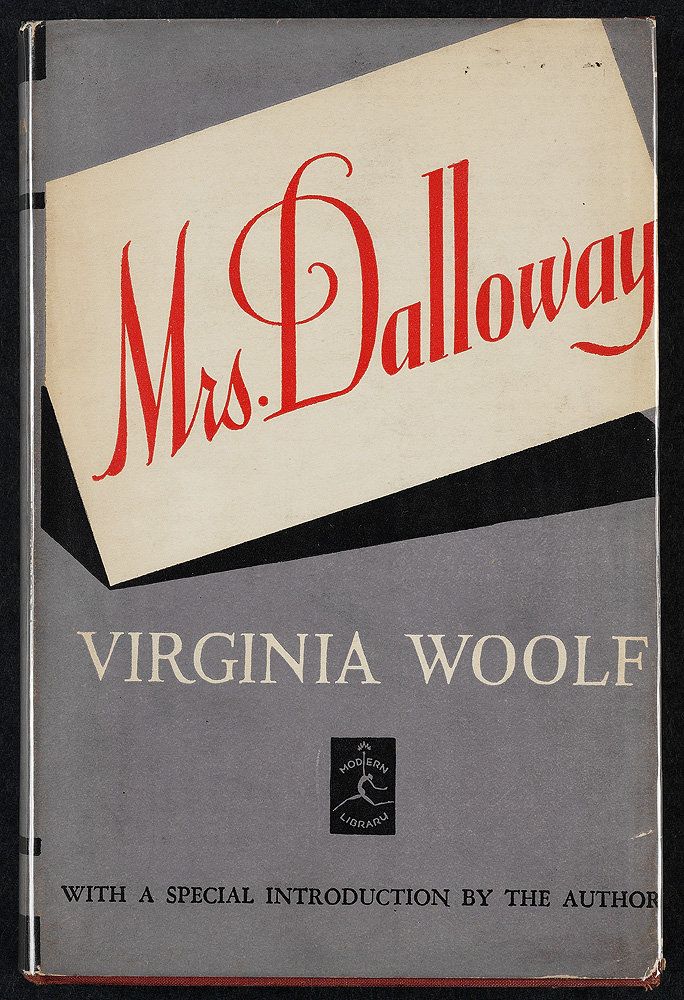
Mrs. Dalloway, by V. Woolf
"Mrs. Clarissa Dalloway is preoccupied with the last-minute details of party preparation while in her mind she is something much more than a perfect society hostess. As she readies her house, she is flooded with remembrances of faraway times. And, met with the realities of the present, Clarissa reexamines the choices that brought her there, hesitantly looking ahead to the unfamiliar work of growing old"
I've never read Woolf, and am looking forward to reading this for the Classics Club!


The Driver's Seat, by M. Spark 
"Lise has been driven to distraction by working in the same accountants' office for sixteen years. So she leaves everything behind her, transforms herself into a laughing, garishly-dressed temptress and flies abroad on the holiday of a lifetime. But her search for adventure, sex and the obsessional experience takes on a far darker significance as she heads on a journey of self-destruction. Infinity and eternity attend Lise's last terrible day in an unnamed southern city, as she meets her fate"
This was actually inspired from a retrospective hosted by Simon and Harriet.  I read it within one day, and was seriously blown away.  Now I'm looking for more books by Spark!


Wednesday, 25 April 2012

The Memory Chalet

This is a peculiar subject - what happens when you find yourself trapped inside your body?  What thoughts, what regrets, what needs, what worries go on in your mind, while you await your death?  I started having an interest in these questions, after reading Tuesdays with Morrie, an excellent wake-up call of what really matters in life, and what to avoid in order to fully benefit from it.  I then read about The Memory Chalet by Tony Judt in Nigella Lawson's blog, and I was interested to see how these questions are seen through the eyes of someone whose actual work is to jot down the history of the world.

The Memory Chalet, despite its sad content, does not have a melancholy theme.  The author explains already in the very beginning of the book the cause of his slow demise, Lou Gehring's disease, without any emotional attachment.  While I cannot imagine how I would have reacted to similar news, I can fully sympathise with his intention to make the most out of a sinister situation.


Judt begins by describing the thought-arranging process, something like compartmentalisation (I use this technique particularly with painful/difficult memories, in situations when I have to remain calm/cheerful/optimistic).  He uses a chalet for this purpose, which I found rather peculiar.  Is it a matter of size?  of country? no, he simply does not want to impress, he wants it to serve. Just a thought...


From then on, he begins taking advantage of his sleepless, motionless nights and goes back in time to his austere childhood (rationing in post-war Britain) and how this developed his character.  I have not had that experience, but I can well imagine his dislike for present-day extravagance.  From corruption to the 15 minutes of fame, most parts of our lives have been shattered to pieces and provide no motive for improvement.  Why should I study, learn a profession, be good at my job to set an example for the next generation, when the person next to me will be on Reality TV, make headlines and set a (bad) example and laugh all the way to the bank?  True, it's the law of demand and supply, but in our days these two are highly suspicious...  


In this point I also liked Judt's differentiation between being and becoming.  It is really that small difference that can have a major impact on one's life - being, passive, the duty, rather unchanged versus becoming, developing, the journey, embracing change.


He is displeased with many of today's shortcomings - I suppose every generation is for the following one.  And although I am that generation he's referring to, I myself can see these same shortcomings in the generation after me:  educational standards are getting lower (I have to admit that even at my time, education was only for those who really wanted to learn on their own - the rest did not stand a chance from teachers who knew even less that they did...); politics is happening elsewhere (this was true then as it is now) - and indeed, we have missed the boat; reforms for the sake of reforms have created  mayhem in our public / professional / industrial life, with the result of sub-average products and services.


And then he turns to language... one of my favourite subjects, I have to say:  it's the use of language that sets humans apart from other animals (here I can recommend the documentary Planet Word), and yet, we don't seem to care.  The times we live in promote the use of language to mystify rather than inform:  "we speak and write badly because we don't feel confident in what we think and are reluctant to assert it unambiguously.  Rather than suffering from the onset of "newspeak", we risk the rise of "nospeak"".  If this is painful for me, still in top form, I'm wondering how excruciating it must be for a professional user of language who, in the grip of a neurological disorder, loses control of words.  We are so lucky to have this ability to use a wealth of words - we should never take it for granted.


Tony Judt has had the opportunity and the ability to live a full, hands-on life and, when facing a horrible end, proved he could conquer this feat as well.  He has put his thoughts in this book to shake the rest of us from our comfortable seats and take (back) control of our lives. It certainly has shaken me...


Also read for the What's in a name challenge

Monday, 23 April 2012

World Book night

It is time! The biggest celebration of books around the globe is today!

World Book Night is celebrated primarily in the UK, Ireland, Germany and the USA. With this year's title "A milion reasons to read a book" this event is spreading the word on literacy and the celebration, sharing and enjoyment of reading! Even here in little Belgium, there are bookstores, libraries and cultural centres that have incorporated small-scale events to mark the UNESCO International Day of the Book.

A big hello and thank you to Belezza, Allie and all other bloggers who are participating in this worthy cause and are gifting books in their communities to spread the love and joy of reading on this day!

As my small contribution to this event, I have put those books I have not yet read from the list of the 2012 UK books in my TBR for this year:

The 2012 UK books  and those I've already under my belt!


Friday, 6 April 2012

Agnes Grey


My favourite classic novelist is by far Anne Brontë, even though she only wrote two books, The Tenant of Wildfell Hall and Agnes Grey.  The Tenant is indeed my all-time favourite, so when my book club proposed  Agnes Grey, I knew it was time to revisit this one as well - last time I read it I was still a young adult (*aah*)

Even from the first pages, Anne's writing style is evident - describing in all honesty what each situation entails, especially if it's bound to be uncomfortable (for the time in question).  It is exactly what I long to read in a book:  great use of language and great, multi-faceted storyline.

Agnes Grey also has the bonus of dealing with a subject that was prone to misinterpretation, the job of a governess. Agnes looks forward to the life of being a governess, only to find out that she's actually less than a servant - the children treat her like a toy:
"I must run, walk, or stand, exactly as it suited their fancy"
for someone who has proved educational qualifications, this must be the utmost disgrace, to be acknowledged neither by parents nor by pupils:
"... there are few situations more harassing than that wherein,  however you may long for success, however you may labour to fulfil your duty, your efforts are baffled and set at nought by those beneath you (the pupils) and unjustly censured and misjudged by those above (the parents)"

Anne Brontë develops all characters in this book to the minutest detail so that she will explain and demonstrate how the various elements, however insignificant they may seem, contribute to the storyline.  When little Tom prides himself in front of his siblings that he will torture the birds found in a nest, "his face is twisted into all manner of contortions in the ecstasy of his delight" - what dark pleasure for such a young child.  But what is the reaction of the mother? the poor creatures "were all created for our convenience".  I can not only imagine the scene, but I can also feel  the coldness in the atmosphere and poison oozing from everywhere!

Agnes, just as Anne, are daughters of clergymen, with the result that much of their upbringing relates to Christian beliefs.  This is in stark contrast with the pupils both have had to face as governesses: "to submit and oblige was the governess's part, to consult their own pleasure was that of the pupils".  The pupils are almost always of a specific social status, that entitles them to mingle with the "right" kind of people and to "flirt" with the wrong kind.  Such is the case with Rosalie, the eldest of Agnes's pupils, who is set to marry someone with great affluence.  Her mother sees to this, as well as to make certain that Agnes should not forget that "it is not proper for a young lady of her rank and prospects to be wandering about herself in that manner", i.e. mingling with people beneath her class.  

Agnes throughout her stay, becomes stoic, trying to remain faithful to her own beliefs, help the pupils as much as she could, help other - poor - people in their needs, and, slowly, fall in love with the curator.  Mr. Weston is rapidly gaining the admiration of Rosalie as well, however, and here again we get a vivid description of all the mischiefs caused just to be able to claim yet another victim of one's irresistible beauty.  At this point, I was really impressed by how boring that particular class must have been - especially the women of that time, as they were not allowed any interests that might have improved their standing...

The end is as close to reality as can be:  Rosalie does indeed marry Sir Thomas Ashby only to discover that she despises her husband, that she cannot see herself caring for her child and finding it hard to reconcile with her mother-in-law.  Now that she has settled for a nun's life, she longs for her maiden years.  Agnes, on the contrary, will eventually marry Mr. Weston, and have a family life that, despite their own trials, is amply sufficient: "... by never attempting to imitate our richer neighbours, we manage to enjoy comfort and contentment ourselves".  I could actually suggest this to a lot of people in our days!

The only "flaw" I would say I found in this book is Agnes herself.  She remains exactly the same throughout the story, never evolving - which is a pity, because she demonstrates all the abilities for breaking barriers.    Other than that, this book provides ample evidence of a great writer in the making.  I'm glad I re-read this classic!


Also read for the Back to the Classics challenge

Sunday, 1 April 2012

My progress so far


I'm thoroughly enjoying my first challenges as a blogger, and I see that there's way too much more to do before I'm through.  Here's a recap of my standing in the challenge world:


  • What's in a name: 4/6 read
  • Mystery & Suspense reading: 2/12 read (I need to up this one)
  • Back to the Classics: 1/9 read 
  • Ireland reading: 1/5 read
  • Graham Greene: 0/4 read (really, a disgrace!)
  • European Challenge: 2/5 read


My major challenge of this year, War and Peace, is not going as I would love to, with only 3 books read so far .... I can only hope that the Easter break will allow for more reading!

My last "challenge", the Century of books, is on the contrary going well, with 8 books read so far, but almost 90 already set (not an easy task, mind you!)


In April, I HAVE to finish Ministry of Fear by Graham Greene because it's taking much more than it should, together with these books:


- 101 Dalmatians by D. Smith (I love it!)
- Agnes Grey by A. Bronte (good old classic reading...)
- The Memory Chalet by T. Judt (sad but very interesting)
- Barchester Towers by A. Trollope (have no idea, would like to be pleasantly surprised!)

and of course, I keep reading Bleak House by Ch. Dickens for the Unputdownables read-a-long.


What are your plans?

Tuesday, 27 March 2012

Top Ten Tuesday


This week's Top Ten  Tuesday hosted by the Broke and the Bookish is about the 10 books in my TBR I would play hooky with (i.e. not attend school without permission - yes, people, I had to look it up!).  In my case, that would be work, which would never happen, but theoretically speaking, I would LOVE to miss an event I'm not that keen to attend reading these books in my garden on a sunny afternoon (with a huge glass of cold ice-tea and birds singing around me and the flowers smelling oh so wonderful):

1.  A Room with a view by E.M. Forster:  I've seen the movie all through my adolescence, but have only read the novel once.  It's time I revisited all those tiny streets in Italy...

2.  Our man in Havana by G. Greene: a little espionage and political satire never hurt anyone... 

3.  The unbearable lightness of being by M. Kundera:  another one from my early years as a reader, the fine sadness I felt would be lovely to counterbalance my perfect reading environment (fictional, of course)

4.  Gadsby by E.V. Wright:  a book without the letter "e" - how intriguing is this?

5.  The Great Gatsby by F.Scott Fitzgerald:  Fitzgerald at his best - plus an atmospheric description of the "naughty 20's"

6.  Anything by Agatha Cristie, but better yet anything with Miss Marple!

7.  Breakfast at Tiffany's by T. Capote - yes, I need some fake glamour to feel better about my daily routine...

8.  84, Charing Cross Street by H. Hanff:  how sweet can an exchange of letters be...

9.  Murder runs in the family by A. George - for once, a fun detective series...

10.  The tenant of Wildfell Hall by A. Bronte:  my favourite piece of classic literature, this would be my last book in my escape, to smoothly bring me back to reality...

It was lovely here with my books - now, on with the cooking / cleaning / washing... 


Thursday, 8 March 2012

A Century of Books


Still in my early months as a blogger, I cannot get enough inspiration from reading other people's blogs and their ways to accumulate tons of reading material.  One such great blog is by Simon T, and his project to read books from the last century.  His project, A Century of Books, reads and reviews (at least) one book per year of the 20th century.  I could not resist such an anti-challenge as he calls it, not because I would read yet another 100 books, but because I 'm bound to find little gems in those books, which I would otherwise not have discovered.  Thanks to Wikipedia, I can actually see the lists of books per year, and look into their content before deciding which one to include in my Century list (plus, I get to look at Simon's and Claire's lists and pick their choices to include in mine...). 

Needless to say, I've almost through compiling my list, which covers 5 languages (so my pledge to read in all the languages I speak still holds strong) and I look forward to see how much time this endeavour will take.  Simon has assured me that there is no time limit - so I'm thrilled.  You can check my progress here - and wish me courage!

Thursday, 23 February 2012

The thousand autumns of Jacob de Zoet

When The thousand autumns of Jacob de Zoet by David Mitchell was proposed in my book club, I was excited. I had first heard about it during another writer's visit and presentation here in Brussels, A.S. Byatt. She spoke so highly of this book, that I knew I would love it too (since I love her books, it follows that I'll love the books she loves too...).  Added to this that the book is about the Orient at the time of the Dutch sea trade, and I was already imagining epic movies of the golden-era...

The size of the book did not hinder me from starting with gusto! This novel starts off so beautifully and before long, pages started flying away, chapters went by ... and I was left perplexed. Did I like the book or not? I just couldn't tell. This is the first time something like that has ever happened to me, so I was quite at a loss. In discussing this with other people, I soon discovered that I was not the only one. But why? Something as simple as liking a book (or not) surely should be evident. It was only when I started reading another book in parallel (that was the exact opposite of this one) that I discovered what the matter was.

The book has excellent content and the research carried out is extensive - and this alone makes me love it.  The information on the Japanese Empire of 1799,  the lives and mischiefs of merchants, courtesans and interpreters, the corruption among the Dutch East Indies officials were all there to ignite my imagination.

What is lacking however, at least for me, is the eloquence. So much is lost in the transcription of all the stories happening to de Zoet during his stay in the Orient. I cannot feel the passion, the tension that I would imagine was happening to someone "invading" a culture so foreign, so closed to outsiders. The writing style and tone is constant throughout the book and this makes the characters in the book colourless, odourless, tasteless. (The most colourful characters are the minor ones...). As I was reading of the adventures, I was constantly surprised that they were described as a "matter of fact". I wanted the highs and lows, the vibrant colours, the excitement, the lure of anything oriental... Alas, it was not meant to be. It seems like several (perhaps too many?) stories start throughout the book, but are never finished. Characters or relationships are not developed enough so that I could make almost no sense of the actions.

Was I wrong in expecting more emotion? Was the purpose of the book perhaps the unveiling of this truth  - that whatever we Westerners believe happened in those days in the Far Orient is just a figment of our imagination? Who knows...

Monday, 20 February 2012

Books to read when ill

I've been down with the flu for 4 days now, and my brain is no longer functioning... this makes me very sad, because there are plenty of literature books I would like to read, but do not have the capacity... The only books I can muster to just barely read are some like this:


The French Archive of Design and Decoration


Sketches, designs and patterns of all the ideas for furniture, textiles, wallpapers -- anything basically to do with the interiors.  On a good day, I would be inspired to start changing my own house, but on days like this, I just look at the beautiful pictures and perhaps make a note somewhere for a later date...


Elizabeth Taylor - My love affair with jewelry

Well, I can't say much - she did have beautiful jewelry (I actually had the opportunity to see some of them at Christie's in Paris), but really, they are good for the soul!  Such exemplary stones counter the effect of all the medication I'm taking...


Carolyne Roehm - A passion for flowers

One of the most inspirational publications I've ever read about flowers, I constantly return to this book, just to marvel at the beauty of nature!  Roehm used to be a fashion designer, before making a turn in her life and discovering the "little pleasures" - it's always reassuring that however ill I am, there are these colours around me to comfort me...

(now, back to sleep...)


ShareThis

LinkWithin

Related Posts Plugin for WordPress, Blogger...